 Printhawk
Limited edition prints: how to run an edition properly
Updated
A limited edition print is one of a fixed, stated number of copies, each numbered (for example 12/50) and usually signed, at one size and on one paper. Decide the edition size before the first sale, never reprint past it, keep a record of who bought each number, and say clearly what the buyer gets.
Open, limited and signed: the differences
| Type | How many | Usually |
|---|---|---|
| Open edition | Unlimited | Unsigned; any size; lower price |
| Limited edition | A fixed number, stated in advance | Numbered and signed; one size and paper per edition; certificate |
| Artist’s proofs (AP) | A small set outside the main edition | Marked “AP”; count them in the total you disclose |
| Signed open edition | Unlimited | Signed but not numbered |
Setting up an edition
- Fix the edition size and whether it covers one size or each size separately. Many artists run a separate edition per size; if so, say so.
- Fix the paper and process. Archival pigment printing on a named cotton or baryta paper is the norm for fine art editions (see archival prints).
- Decide on proofs, and include them in what you disclose.
- Write it in the listing: image, size, paper, edition size, numbering, signature, certificate, and that no further copies will be made in that edition.
- Keep a ledger: number, date, order reference, buyer. You’ll need it for replacements and resale questions.
Limited editions with print on demand
A print lab prints whatever orders arrive; it doesn’t know your edition is limited. So:
- Stop at the limit. Set stock in your shop to the edition size so the listing sells out on its own.
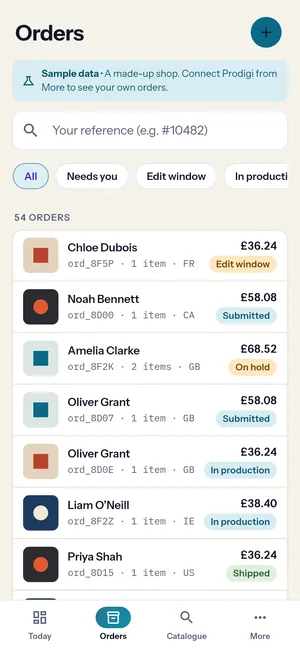
- Record the number per order. Use your order reference: Prodigi orders carry a merchant reference you can search by, so “Edition A-12/50” can be found later.
- Signing and numbering. A print shipped straight from the lab can’t be signed by you. Either sign and number a certificate and send it separately or as an insert, or have the prints delivered to you, sign them and post them on.
- Replacements. If number 12 arrives damaged and the lab reprints it, the replacement is still 12/50. Mark the damaged copy destroyed in your ledger so the edition stays honest.
Prodigi’s branding options include packing slips, postcards, flyers and stickers as inserts, which can carry edition details (see Prodigi branding).
Disclosure rules
Some places regulate how limited editions are described. In California, Civil Code sections 1740 to 1745 cover “fine art multiples”: sellers of limited-edition prints must disclose details including the maximum number of signed or numbered impressions, unsigned impressions and proofs, and the total edition size, and the stated edition size acts as a warranty that no more were made. If you sell to collectors in a regulated place, read the law there. This is general information, not legal advice.
Pricing an edition
Limited editions sell for more than open editions of the same image because of scarcity and the signature. Some artists raise the price as the edition sells through. Whatever you do, price from the full cost of an order first (see how to price art prints), and remember that an edition can’t be reprinted when it sells well, so the total profit is capped.
Questions
What makes a print a limited edition?
The artist fixes a maximum number of copies of an image, at a stated size and on a stated paper, numbers each copy (for example 12/50) and never prints more of that edition. An open edition has no such limit.
How many prints should be in a limited edition?
There is no legal or industry-wide number. Pick a size you can realistically sell and stick to it: small editions justify higher prices but sell out sooner. State the number clearly before you sell the first copy.
Can you do limited editions with print on demand?
Yes, but you track the numbers yourself. The lab prints whatever orders arrive, so you stop selling at the limit, record which number went to which order, and sign or number by certificate or by having prints sent to you first.
Do I have to provide a certificate of authenticity?
Not generally, but buyers expect one. Some places have disclosure laws: California’s Civil Code sections 1740 to 1745, for example, require sellers of limited-edition fine prints to state details such as the edition size.
Sources
- California Civil Code sections 1740–1745 (fine art multiples), via california.public.law and law.justia.com, read 27 November 2026; check the current text at leginfo.legislature.ca.gov.
- Prodigi Print API v5 reference: order
merchantReferenceand branding insert types (prodigi.com/print-api/docs), read 27 November 2026.